The 2026/27 EuroLeague season brings important changes to basketball officiating, particularly in the interpretation of shooting actions, physical contact and disciplinary fouls. Euroleague Basketball confirmed the revised guidelines on 15 September 2026, introducing clearer criteria for distinguishing shooting fouls from ordinary contact and replacing the traditional unsportsmanlike foul with two separate categories. The changes also affect technical fouls, player disqualifications and the protection of shooters. Applied across the EuroLeague, BKT EuroCup and Euroleague Basketball SuperCup, these regulations influence how referees assess contested plays and how teams approach defensive situations. Understanding the differences is essential for following disputed decisions, especially when a few seconds of play can determine the outcome of a closely contested match.
New Shooting Rules and the Interpretation of Contact
One of the central changes for 2026/27 concerns the precise moment when a player enters the act of shooting. Under the updated interpretation, a jump shot or another moving shot begins when the attacking player starts moving both their shoulders and the ball upwards towards the basket. The player must also be in the frontcourt for this interpretation to apply. Previously, disputes often centred on whether the attacker had already begun shooting or was merely preparing to release the ball. The revised definition gives referees clearer physical indicators to examine. Simply holding the ball, bending the knees or preparing to jump does not necessarily mean that the shooting action has started.
The distinction directly affects free-throw decisions. Imagine a player receiving the ball beyond the three-point line while a defender attempts to contest the next movement. If illegal contact occurs before the upward movement of the shoulders and ball begins, the incident is normally treated as a non-shooting foul. If the same contact takes place during a genuine three-point shooting attempt, the attacking player may receive three free throws when the shot misses. If the basket is scored despite the foul, one additional free throw is awarded. The timing of contact is therefore crucial, particularly when attackers move rapidly from receiving a pass into a shooting motion.
Drives towards the basket are assessed using a related but separate interpretation. For a lay-up or another continuous shooting movement, the act of shooting typically begins after the player gathers the ball while advancing between the three-point line and the basket. The movement must continue naturally towards the attempted release. A player who is still dribbling, changing direction or preparing to gather the ball has not automatically entered the shooting action. This distinction is particularly relevant to guards who attack the paint at speed, where defenders frequently make contact during the final steps. Referees must assess whether the attacker was genuinely completing a continuous attempt or was still moving towards a possible shooting position.
Rip-Through Actions, Follow-Through Contact and Landing Safety
The new interpretation also addresses the rip-through movement, a technique commonly used by perimeter players to draw contact. During this action, the attacker moves the ball sideways across the defender’s extended arm, sometimes creating a collision before moving into a shot. Under the 2026/27 guidelines, contact during a rip-through is classified as a non-shooting foul rather than a shooting foul. Continuing the movement towards the basket does not change the original classification. This prevents an attacker from automatically obtaining shooting free throws through sideways contact. However, the defender can still be penalised for illegal contact, and free throws may follow if the opposing team has already reached the relevant team-foul penalty situation.
Contact with the shooting hand after releasing the ball is another area receiving clarification. Minor contact with the hand during the follow-through can be legal, provided it occurs clearly after the ball has been released and remains limited to the permitted area. Contact with the wrist, arm, body or side of the hand is still considered a foul under the updated guidance. Referees therefore need to examine both the timing and location of the contact. For defenders, this means that a successful attempt to challenge a shot must be controlled throughout the movement. Reaching towards the shooter after release does not automatically make contact acceptable, particularly when the defender strikes the wrist or interferes with the player’s natural finishing motion.
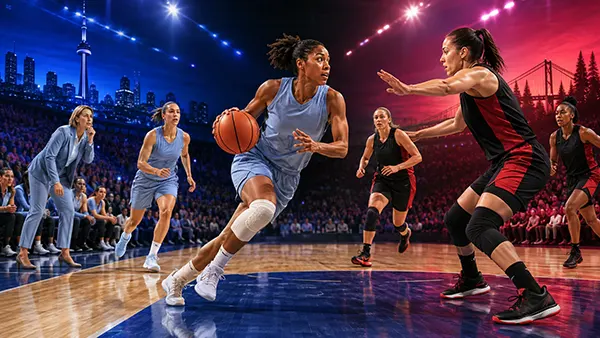
Player safety receives additional protection through stricter treatment of dangerous close-outs. When a defender moves into a shooter’s landing space and the shooter’s foot lands on the defender’s foot, the incident is now classified as a flagrant foul. This replaces the previous unsportsmanlike-foul classification for that specific situation. The rule addresses the risk of ankle and lower-leg injuries when airborne players cannot land safely. Defenders must therefore avoid extending their feet beneath shooters or occupying the space required for a normal landing. The seriousness of the offence is reflected in its disciplinary consequences, as flagrant fouls count towards game disqualification. A defender’s intention to contest the shot does not automatically excuse positioning that creates a dangerous landing.
Disruptive and Flagrant Fouls: A New Classification System
The replacement of the traditional unsportsmanlike foul is one of the most substantial regulatory developments in the 2026/27 EuroLeague. The competition now distinguishes between disruptive fouls and flagrant fouls, creating two classifications for incidents previously assessed within a broader category. Both carry the same immediate penalty previously associated with an unsportsmanlike foul, including the applicable free throws and subsequent possession. However, their disciplinary consequences differ significantly. A disruptive foul does not count towards the special disqualification combinations, while a flagrant foul does. The distinction helps referees separate contact intended to interrupt basketball action from conduct that is reckless, violent, dangerous or outside legitimate play.
A disruptive foul involves illegal contact that interrupts the normal flow of the game and places an opponent at a disadvantage without meeting the criteria for a flagrant offence. A common example occurs during a fast break when a defender deliberately fouls an advancing attacker to prevent a promising scoring opportunity. Another example involves intentional contact committed to stop the game clock near the end of a quarter. Such actions may be tactical rather than violent, but they still interfere unfairly with the attacking team’s opportunity. The updated classification recognises this difference. Teams cannot assume that deliberately stopping a transition will be treated as an ordinary personal foul simply because the physical contact appears relatively minor.
Flagrant fouls involve more serious conduct, including contact that is not part of a legitimate basketball action or is reckless, violent or dangerous. Examples can include a hazardous challenge against an airborne player, excessive physical contact or an action that creates an unreasonable risk of injury. Referees assess the nature of the movement, the player’s opportunity to make a legitimate basketball play and the danger created for the opponent. A physically intense challenge is not automatically flagrant simply because an attacker falls heavily. Equally, a player does not need to cause an actual injury for dangerous contact to receive this classification. The updated system places particular importance on the action itself rather than the reaction of players or spectators.
Technical Fouls, Disqualification Thresholds and Discipline
Technical fouls have also been divided into Category 1 and Category 2 offences. Category 1 covers inappropriate conduct such as disrespectful communication, taunting an opponent, deliberately obstructing another player’s vision and pretending to have been fouled. These offences count towards disqualification. Category 2 covers situations including delaying the game, hanging on the rim after a dunk and defensive goaltending during the final free throw. Category 2 technical fouls do not count towards disqualification under the new classification. This distinction means that referees must identify the nature of the offence rather than treating all technical fouls as equivalent. It also makes controlling emotions especially important for players involved in repeated disputes.
The disqualification rules establish specific combinations of serious offences. A player is disqualified after receiving two Category 1 technical fouls, two flagrant fouls, or one Category 1 technical foul combined with one flagrant foul. Disruptive fouls do not contribute to these particular combinations, although their immediate penalties still apply. Head coaches face separate thresholds: two personal Category 1 technical fouls result in disqualification, as do three Category 1 technical fouls associated with bench conduct under the prescribed combinations. These rules can have considerable consequences during close matches, when repeated complaints or unnecessary confrontations may remove an important player or coach before the final whistle.
EuroLeague referees also maintain strict standards regarding simulation and inappropriate behaviour. They are not required to issue a warning before penalising misconduct or attempts to deceive officials through exaggerated reactions. A player who falls without sufficient contact or deliberately acts as though a foul occurred may therefore receive an immediate Category 1 technical foul. Coaches must also control their benches, particularly during transitions. If a head coach or another registered team member leaves the bench area, enters the court and interferes with an opponent’s fast break, the head coach is automatically disqualified. These provisions reinforce the expectation that players and coaching staff must allow the game to continue without unnecessary interference.
How Refereeing Changes Influence EuroLeague Matches in 2026/27
The updated shooting criteria require attacking players to pay closer attention to how they initiate contact. Guards who previously relied on sideways rip-through movements to obtain shooting fouls must recognise that such contact is now treated differently. Players driving towards the basket must complete a genuine continuous movement for contact to qualify as occurring during the act of shooting. These interpretations could influence offensive decision-making, particularly in situations involving isolated defenders and late-clock possessions. However, they do not automatically mean that the EuroLeague will experience fewer fouls or free throws. The actual statistical effects depend on player behaviour, defensive adjustments and how consistently officials apply the guidelines across matches.
Defensive teams also face practical adjustments. Close-outs against perimeter shooters require greater control because entering the shooter’s landing space can result in a flagrant foul. Defenders challenging jump shots must avoid illegal contact with the wrist, arm or body, even when the ball has already been released. At the same time, recognising that sideways rip-through contact is not a shooting foul may help defenders better understand the consequences of specific movements. Coaches can incorporate these situations into training through controlled shooting contests, transition-defence exercises and simulated late-game scenarios. Effective preparation involves learning when physical contact is permitted, rather than simply reducing defensive intensity or avoiding every challenge.
The EuroLeague’s existing defensive semi-circle interpretation remains another important factor in contested decisions near the basket. A secondary defender positioned inside the restricted semi-circle who does not jump vertically to defend can be penalised for blocking when an airborne attacker arrives from outside the area. There are important exceptions, including situations where the attacker was not airborne at the moment of contact, received the ball inside the semi-circle or led with a foot, knee or elbow. These distinctions mean that a collision beneath the basket cannot be judged solely by identifying which player was standing still. Referees must consider the defender’s position, the attacker’s movement and the circumstances immediately preceding contact.
Instant Replay, Coach Challenges and Decisions Under Pressure
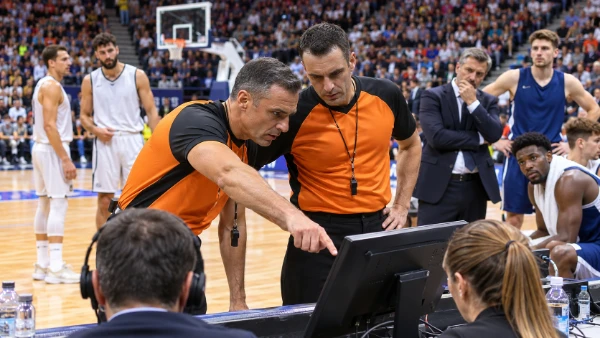
Video review continues to play an important role in EuroLeague officiating during the 2026/27 season. Under the competition’s existing procedures, each head coach receives two challenges per game, but one is forfeited if it has not been used during the first 38 minutes. Coaches can request reviews for situations included in the Instant Replay System’s permitted categories, subject to the relevant conditions. The system can assist officials when they need to examine specific incidents that may affect possession, foul classification or other reviewable decisions. However, the availability of video does not mean that coaches can challenge every disputed judgement. The permitted review list determines which decisions can be reconsidered through the formal procedure.
An important exception concerns identifying the player responsible for a foul. Referees can independently examine video footage when they suspect a foul has been recorded against the wrong player, but coaches cannot request that particular review. This distinction matters when a player is approaching the personal-foul limit or when the recorded identity could affect participation later in the game. Other eligible reviews may require officials to examine the sequence of contact, the position of players or the timing of an incident. The objective is to correct decisions within the established review framework while preserving the normal flow of the contest. The new foul classifications make accurate recording especially important because different technical and contact offences now have different disqualification consequences.
For spectators, the 2026/27 changes provide a clearer way to interpret controversial decisions. A foul committed before the defined shooting movement may not produce shooting free throws, while contact during a genuine attempt can carry a different penalty. A deliberate interruption of a fast break may be classified as disruptive, whereas dangerous contact with an airborne shooter can be flagrant. Technical fouls must also be understood according to their category and disciplinary consequences. These distinctions do not eliminate judgement calls or disagreements, but they give officials more precise criteria for assessing incidents. Throughout the season, the central challenge is consistent application: protecting players, recognising legitimate physical basketball and ensuring that comparable situations receive comparable decisions regardless of the teams involved or the importance of the match.